
Modern agriculture and horticulture increasingly rely on substances that, while not traditional plant protection products, play a crucial role in influencing plant physiology and crop quality. One such compound is ethephon (2-chloroethylphosphonic acid), a systemic growth regulator. Its distinctive feature lies in its ability to be readily absorbed by plants, releases ethylene, a natural phytohormone. Ethylene regulates numerous physiological processes, most notably fruit ripening.
Because of these properties, ethephon is widely used in fruit and vegetable production, particularly when uniform and accelerated ripening is essential. This is especially valuable for crops such as tomatoes and peppers, where consistent color and maturity are both key market requirements and important for reducing losses from diseases.
Ethephon has been approved for use in many countries across a range of crops, including fruits, vegetables, cereals, and oilseeds. In the Republic of Serbia, the Regulation on maximum permitted levels of residues of plant protection products in food and animal feed (“Official Gazette of RS” 91/2022 and 26/2024) defines the permitted levels of ethephon residues in food and animal feed.
Ethephon is a highly water-soluble compound that, upon penetration into plant tissues, undergoes decomposition to yield ethylene, phosphoric acid, and chlorides. Among these products, ethylene is the physiologically active component, functioning as a natural plant growth regulator (phytohormone).
As a phytohormone, ethylene participates in a wide array of processes, including:
In agricultural practice, the application of ethephon serves as a means to modulate and synchronize physiological processes that would otherwise occur more gradually or irregularly under natural conditions. This controlled ethylene release enables producers to enhance harvest uniformity, improve crop quality, and optimize production timing.
The application of ethephon in fruit and vegetable cultivation offers significant agronomic and economic advantages, primarily through the acceleration and synchronization of fruit ripening. The controlled release of ethylene following ethephon application enables producers to obtain several measurable benefits, including:
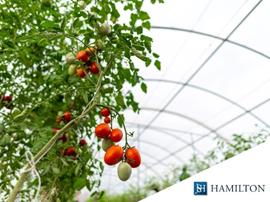
Although fruits and vegetables represent the primary sectors utilizing ethephon, this compound also plays an important role in cereal production. During the heading stage, cereals are frequently exposed to adverse weather conditions, such as strong winds or heavy rainfall, which can induce lodging—the bending or collapse of stalks—resulting in considerable yield losses.
In the later phases of cereal growth and development, auxins become the dominant class of phytohormones. These compounds promote vigorous elongation of the main stem while simultaneously suppressing the formation of tillers (side shoots). Elevated auxin levels may also exert inhibitory effects on root system development.
By inhibiting the production and transport of auxins, ethephon supports the development of side shoots and stimulates the growth of adventitious roots. An additional advantage of this substance is its ability to quickly and effectively stop the growth of stalks during the most intensive period of their elongation.
The effect of ethephon application is slight lignification of tissues, which leads to their stiffening and mechanical strengthening of the stalks. Shorter and more stable stalks contribute to better transport of nutrients and water, which leads to more efficient use of resources.
Ethephon cannot be classified as a conventional plant protection agent, as it does not exert a direct biocidal effect on pathogens such as fungi, bacteria or insects. Instead, its protective function is primarily indirect, operating through the modification of plant physiological processes that reduce the duration of crop susceptibility to infection.
By accelerating the ripening process, ethephon enables fruits to reach harvest maturity more rapidly, allowing them to be collected before pathogenic organisms establish infection. This mechanism effectively minimizes the exposure window during which fruits are vulnerable to diseases.
Consequently, ethephon may be regarded as an auxiliary component of integrated plant protection strategies, complementing the effects of conventional fungicidal treatments and contributing to enhanced overall production efficiency and crop health management.
As with all plant growth regulators, the effectiveness and safety of ethephon depend on precise dosage and application timing. Excessive or improperly timed applications may lead to adverse physiological responses, including premature fruit drop, deterioration of fruit quality or accelerated plant senescence. Therefore, adherence to recommended concentrations and growth-stage-specific guidelines is essential to achieve the desired agronomic outcomes while avoiding phytotoxic effects.
Within the European Union regulatory framework, ethephon is officially classified and registered as a plant growth regulator. Its application is governed by established pre-harvest intervals and maximum residue limits (MRLs) to ensure food safety. In practical terms, this requires that farmers and producers strictly follow the instructions specified on registration label, applying ethephon only at approved developmental stages and in accordance with regulatory standards.
When the European Union renewed its approval for ethephon (Commission Implementing Regulation (EU) 2023/2591 of 21 November 2023 renewing the approval of the active substance ethephon in accordance with Regulation (EC) No 1107/2009 of the European Parliament and of the Council and amending Commission Implementing Regulation (EU) No 540/2011), the European Food Safety Authority (EFSA) recommended lowering the acceptable daily intake (ADI) for this substance. Based on the reduced ADI in 2024, EFSA reviewed all maximum residue levels (MRLs) for ethephon.
The European Commission also consulted the EU reference laboratories for pesticide residues on the need to adjust certain limits of determination. These laboratories proposed product-specific limits of determination for ethephon that are analytically achievable, ensuring compliance with updated safety and monitoring standards.
The European Union plans to introduce new maximum residue levels for ethephon in many products from January 2026.
On September 19 this year, the Council of the European Union received a draft regulation amending Annexes II and V to Regulation (EC) No. 396/2005 of the European Parliament and of the Council as regards maximum residue levels for dimoxystrobin, ethephon, and propamocarb in or on certain products.
The European Commission has notified the World Trade Organization (WTO) Sanitary and Phytosanitary Measures Committee (SPS) of its intention to amend the maximum residue levels for ethephon (G/SPS/N/EU/801).
The revised MRLs will have a particular impact on blueberry exporters, for whom the MRLs will be reduced to the limit of quantification.
On June 23 this year, the European Commission published a corrigendum stating that the MRLs for ethephon in nuts (except hazelnuts and walnuts) are also being reduced to the limit of quantification.
It was also proposed to lower the MRLs for apples, pineapples, rye, and wheat. However, the MRL for barley will be increased.
Table 1. Planned changes to maximum residue levels of ethephon in food products (source: www.agrinfo.eu)
| Group | Products | Ethephon (mg/kg) | |
| Current MRL | Planned MRL | ||
| Nuts from nut trees | almonds, Brazil nuts, cashews, chestnuts, coconuts, macadamia nuts, pecans, pine nuts, pistachios | 0,1 | 0,02* |
| Pome fruits | apples | 0,8 | 0,7 |
| Berries and small fruits | blueberries | 20 | 0,01* |
| Various fruits | pineapples | 2 | 1,5 |
| Cereals | barley | 1 | 1,5 |
| rye | 1 | 0,8 | |
| wheat | 1 | 0,5 | |
* Limit of detectability
Suppliers of apples, pineapples, rye, and wheat are advised to review their current ethephon application practices and evaluate whether adjustments to existing good agricultural practices will be required to ensure compliance with the forthcoming maximum residue levels (MRLs). For producers of blueberries and nuts, it is particularly critical to assess the current use of ethephon and consider alternative strategies, bearing in mind the revisions to MRLs.
In addition, the EU also proposes to lower the limit of determination for a wide range of products:
– for fruit, vegetables, cereals, sugar crops, and animal products from 0.05 to 0.02 or 0.01 mg/kg,
– for oilseeds, oleaginous fruits, tea, coffee, cocoa, and spices from 0.1 to 0.05 mg/kg.
Summary
Ethephon represents an important tool in modern fruit and vegetable production. As a plant growth regulator, it functions through the controlled release of ethylene, which accelerates and synchronizes fruit ripening, enhances commercial quality and facilitates efficient harvest management. In cereal cultivation, ethephon modulates phytohormone activity, resulting in shorter, more rigid stalks that reduce the risk of lodging, thereby improving both resource utilization and crop resilience against environmental stress and disease.
Although ethephon does not possess direct pesticidal activity, its role in regulating plant physiological processes demonstrates that such interventions can be as vital as chemical crop protection measures. When applied according to recommended guidelines, ethephon constitutes a valuable component of sustainable agricultural and horticultural systems.
In SP Laboratorija, the determination of residues of ethephon in food and animal feed is performed using method with a limit of quantification that meets both current requirements and future, more restrictive limits.


