
Pyrrolizidine alkaloids (PA) are toxic compounds that are naturally found in certain plant species as a defense mechanism against insects and herbivores. They represent a group of natural alkaloids with a pyrrolizidine structure. They can secondarily contaminate other plants – including medicinal plants and food products of plant origin, by being transferred from weeds present in crops of edible plants, which can lead to the risk of toxicity in humans.
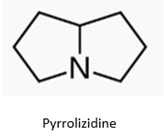
Pyrrolizidine alkaloids were first discovered in plants in the 19th century. Unaware of their toxic effects, many plants containing PAs have been traditionally used for medicinal purposes in various cultures around the world.
Contamination of food products and herbal medicines with pyrrolizidine alkaloids has recently become a significant international problem, as PAs have been identified in various foods and plant materials, such as honey, teas, herbs, vegetables, cereals, salads and spices. That is why this topic is increasingly becoming the subject of scientific discussions, research projects, reports and regulatory measures.
Effect on health can be acute (intake of large doses in a short period of time) or chronic (long-term intake of small amounts), which is more dangerous, because symptoms appear gradually. It has been established that long-term exposure to PAs can cause serious negative health consequences, which are related to their genotoxic effects.
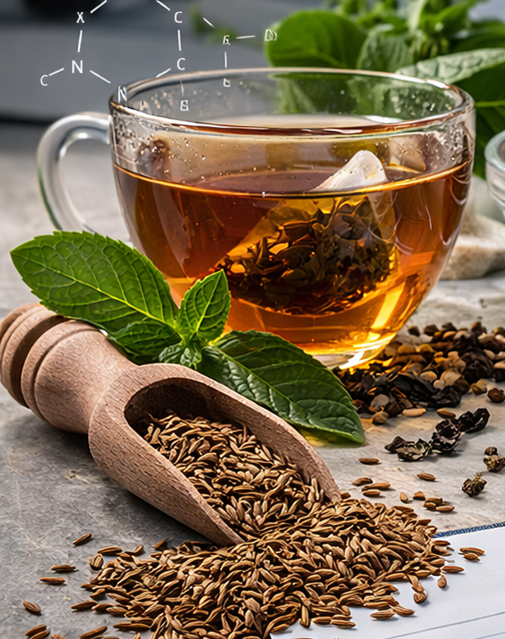
The list of pyrrolizidine alkaloids and the maximum allowed concentrations are defined:
– in the Republic of Serbia in the Regulation on maximum concentrations of certain contaminants in food (“Official Gazette of RS”, no. 73/2024, 90/2024, 47/2025, 61/2025 and 103/2025)
– in the European Union in regulation Commission Regulation (EU) 2023/915 of 25 April 2023 on maximum levels for certain contaminants in food and repealing Regulation (EC) No 1881/2006.
The maximum permitted levels refer to the sum of the specified PAs, which are individually quantified and expressed as a sum.
Limit values for PA are defined in different products, such as:
• tea
• dried aromatic herbs
• herbal infusions
• cumin
• food supplements containing botanical preparations
• pollen based supplements
• pollen and pollen products
Align with the development of scientific achievements, instrumental determination techniques in food safety testing laboratories have to be developed at the same time.
SP Laboratorija has implemented a method for determining all of pyrrolizidine alkaloids defined by the regulations. Determination is performed using liquid chromatography with a mass-mass detector and limit of quantification is 10 µg/kg.
For any additional information, contact our customer support associates: splaboratorija@splaboratorija.rs


